Manifesto

A Verified Skills Protocol for the Post-AI Economy

Humanproof Research, March 2026

Abstract

The relationship between human skill and economic opportunity is breaking. For decades, credentials served as the bridge: degrees, certifications, and resumes acting as proxies for what a person could do. These instruments were designed for a world where skills were acquired in classrooms, applied in stable careers, and verified by institutions, a world that no longer exists.

Artificial intelligence is creating new categories of valuable work and eliminating old ones at a pace that no credentialing system can match. The average worker now accumulates skills across jobs, side projects, gig work, online courses, and self-directed learning, with no reliable way to prove any of it.

This paper proposes Humanproof, an AI-native protocol for skill verification that ingests evidence from any source, assesses proficiency through the open Humanproof Skill Standard (HSS), and publishes a portable, machine-readable Humanproof Skill Profile (HSP). Humanproof is the trust layer between human talent and opportunity in an economy where both are increasingly mediated by machines.

The Humanproof Score

Zero to one thousand. Five bands. One number.

Humanproof
Skill Score
0/ 1000
Exceptional·Top 1% · Verified
03006008009001000
Anchored on BitcoinUpdated May 2, 2026

One portable number, derived from evidence and recomputed as new signals arrive. Like a credit score, but for what you can actually do.

I. The Credential Crisis

There is a quiet emergency unfolding across the global labor market, and almost no one is talking about it correctly.

The conversation about AI and jobs has centered on displacement: which roles will be automated, how many jobs will be lost, what new jobs will emerge. That framing misses the deeper crisis, which is that the system we use to connect people to jobs is collapsing underneath the displacement question itself.

Consider what happens when a worker loses a role to automation today. They possess skills: real, hard-won capabilities acquired over years of practice. When they enter the job market, they discover that those skills are illegible to the people who could hire for them. Their resume describes job titles rather than competencies, and their certifications, if they have any, are snapshots from a moment in time that may no longer reflect their current ability. Their most valuable skills, the ones learned on the job through experimentation and through solving problems no training program anticipated, often have no documentation at all.

Everybody has hidden skills their friends, family, and coworkers see every day. Yet the current hiring system cannot surface them.

The problem is getting worse as AI compresses the cycle time between “skill acquired” and “skill obsolete.” A certification earned eighteen months ago may already be outdated, and a degree completed five years ago says almost nothing about a person's current capability. The institutions that issue credentials cannot move fast enough to keep pace with the skills that actually matter in the market.

On the demand side, employers face a mirror image of the same crisis. They need specific, verified capabilities, not proxies for capability. A hiring manager looking for someone who can manage an AI-augmented sales pipeline does not need to see a bachelor's degree in business. They need proof that this person can do this specific thing, assessed against a standard they can trust.

The market is screaming for a new trust layer, and the existing solutions cannot provide one.

The Signal Problem

A thousand applicants. One verifiable signal.

Humanproof
Verified
0/ 1000
Exceptional
Sales · Enterprise
94
Negotiation
91
Brand strategy
88
Anchoredots:btc:7c4f…a9e1

Most workers blur into the stack. The few with verified, machine-readable skills cut through.

II. The Failure of Digital Credentials

The first generation of digital credentialing platforms (Credly, Accredible, Badgr, and others) represented a genuine attempt to modernize how skills are documented. They introduced digital badges, machine-readable metadata, and the Open Badge Standard. They were right about the problem they were trying to solve, and wrong about the architecture they used to solve it.

These platforms suffer from three structural flaws that prevent them from becoming the trust layer the market needs.

The portability problem. Digital badges issued on Credly live on Credly. They can be shared as images or links, but they cannot be meaningfully composed, compared, or queried outside the platform that issued them. A worker with badges from three different platforms has three isolated data points, not a coherent skill profile. The credentials are technically portable but practically stranded.

The coverage gap. Credentialing platforms are only as comprehensive as their issuer network. If an employer, training provider, or university has not signed up and actively issues badges through the platform, those skills do not exist in the system. This creates an inverted reality: the most institutionally credentialed workers are the most visible, while the workers who most need visibility (the self-taught, the career changers, the gig workers) remain invisible.

The comparability problem. This is the deepest flaw of the three. A “Sales Skills” badge from Company A and a “Sales Proficiency” certification from Organization B are, in the current system, incommensurable: there is no mechanism to assess whether they represent equivalent capability, overlapping capability, or entirely different skill sets. Without cross-ranking, without the ability to normalize credentials from heterogeneous sources into a unified assessment, digital badges become digital stickers that look official without proving much of anything.

What is needed is an intelligence layer that sits above all credentials, ingests evidence from any source, and produces a unified, verified, dynamically updating assessment of what a person can do. That intelligence layer rests on a common spine: an open specification for what skills exist, what evidence verifies them, and how proficiency is measured.

AWS Certified Cloud Practitioner badge — Credly
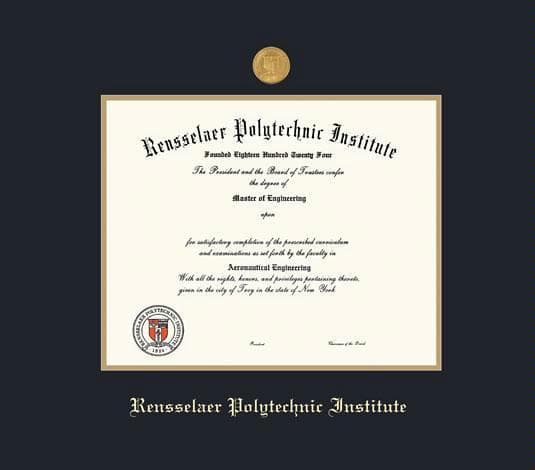
Master of Engineering diploma — Rensselaer Polytechnic Institute
Skills
Strategic Sales
Industry Knowledge
Endorsed by 24 connections
Endorse

The Comparability Problem

Three credentials. No way to compare them.

A digital badge from one platform, a certification from another, and an endorsement from a third sit beside each other with no shared meaning. Each looks official on its own. None of them tell a hiring system anything that translates into the others.

The Humanproof Skill Profile

A single signal that travels with the worker, not the platform.

Every Humanproof Skill Profile is a signed Verifiable Credential. The score on top is computed by an open-source engine reading evidence the worker chose to share, and the atomic, machine-readable skills below it sit on a profile that is portable, shareable, and revocable by the worker at any time.

9:41
Skill aura
Melanie Rothwell
Creative Director
Exceptional
913± 9
/ 1000
Creative Direction
96
Brand Strategy
94
Art Direction
92
Powered by Humanproof

III. The Humanproof Protocol

Humanproof is built on three components: an ingestion layer, an assessment engine, and a publication layer. They share a common spine: the Humanproof Skill Standard (HSS), an open specification for what skills exist, what evidence verifies them, and how proficiency is measured. Together they transform fragmented, static, platform-locked credentials into a unified, dynamic, portable proof of human capability.

3.1 The Humanproof Skill Standard

The Humanproof Skill Standard is the open specification at the center of the protocol, a structured ontology of atomic skills. Each skill record declares the evidence types that verify it (with authority weights from 0.0 to 1.0), the decay half-life that determines how recency affects confidence, the dependencies and related skills that connect the graph, and the proficiency rubric that defines what novice, intermediate, advanced, and expert mean for that specific skill.

Every assessment engine reads these records directly into its scoring computation. The same evidence under the same engine version produces the same score, anywhere in the world, deterministically.

The standard organizes skills into five top-level domains:

  • Technical. Engineering, computer science, data, finance, hard sciences, quantitative disciplines.
  • Creative. Design, brand, copy, music, film, visual arts, performing arts.
  • Interpersonal. Leadership, mentoring, negotiation, communication, facilitation.
  • Domain. Profession-specific bodies of knowledge: medicine, law, education, manufacturing, hospitality.
  • Foundational. Literacy, numeracy, critical thinking, research methodology.

The number of domains is deliberate, reflecting how human capability actually divides at the highest level of abstraction. Existing taxonomies tend to be skewed toward the institutions that built them: ESCO is European-labor-heavy, O*NET is US-occupation-heavy, and LinkedIn is technical- and recruiter-heavy. The HSS corrects that imbalance and treats brand identity systems with the same structural depth as React, and a senior nurse's clinical judgment with the same depth as either.

The standard is published under the Creative Commons Attribution-ShareAlike 4.0 license. Anyone can use it, build commercial products on top of it, or implement their own conformant engine. The reference implementation is the Humanproof assessment engine, open-sourced under Apache 2.0. Engine binaries are reproducibly built and identified by content hash, so any third party can rebuild from source and verify they hold the same engine that produced any given score.

The Humanproof Skill Standard

Five domains, balanced by design.

Technical

engineering · data · finance

Creative

design · brand · arts

Interpersonal

leadership · trust

Domain

medicine · law · craft

Foundational

literacy · numeracy

ESCO is European-labor-heavy. O*NET is US-occupation-heavy. The HSS treats brand identity systems with the same structural depth as React.

3.2 The Ingestion Layer

Humanproof begins by accepting evidence from everywhere, by deliberate architectural choice. Rather than building another gated ecosystem that depends on issuers opting in, the protocol treats the entire landscape of human skill documentation as input.

Sources include, but are not limited to:

  • Digital badges from any platform (Credly, Accredible, Badgr, custom issuers)
  • Formal credentials (degrees, transcripts, professional certifications)
  • Resumes and CVs in any format
  • Professional portfolio artifacts (code repositories, published work, project documentation)
  • Performance reviews and employer assessments
  • Peer and manager reviews submitted with verified working relationships
  • Training completion records
  • Self-reported skill evidence with supporting documentation

The ingestion layer normalizes this heterogeneous input into a structured format. Every piece of evidence is tagged with its source, its recency, its issuer where applicable, and its evidentiary weight: a measure of how much trust the system places in it based on source reliability and specificity. The HSS defines these weights canonically per skill, so every conformant engine treats the same evidence the same way.

The system does not require issuers to participate, because Humanproof can index publicly available credential data at scale and build a comprehensive skills graph without depending on institutional cooperation. The network grows from the edges in rather than from the center out.

3.3 The Assessment Engine

The assessment engine is the reference implementation of the Humanproof Skill Standard and the primary innovation this paper describes.

Existing credential systems are attestation-based: they record that an authority said a person has a skill. Humanproof is evidence-based: it evaluates the totality of available evidence and produces an independent assessment of proficiency.

The engine operates through four stages:

Extraction. Using large language models fine-tuned for skill identification, the engine analyzes raw evidence and extracts discrete skills. A resume that describes “managed a team of 12 engineers building a real-time data pipeline” yields specific skill extractions: team leadership, engineering management, real-time systems, data engineering, pipeline architecture.

Normalization. Extracted skills are mapped to atomic HSS records, whose structured ontology covers technical, creative, interpersonal, domain, and foundational capability with cross-domain balance from version 1.0 onward.

Proficiency Assessment. For each normalized skill, the engine evaluates proficiency across four levels (Novice, Intermediate, Advanced, Expert) based on multiple weighted signals:

  • Credential authority weight: A certification from a recognized institution carries more weight than a self-reported claim, but less than a portfolio of demonstrated work. The HSS pins these weights canonically per skill.
  • Evidence depth: Multiple independent sources confirming the same skill increase confidence.
  • Recency: Skills decay. Recent evidence is weighted more heavily. The decay curve varies by skill category and is encoded in the HSS, not the engine.
  • Specificity: A credential that names a precise skill carries more signal than one that names a broad category.
  • Cross-validation: When evidence from independent sources corroborates the same skill, confidence compounds. The HSS specifies the compounding function so that all conformant engines produce the same result on the same inputs.

Each skill assessment produces a confidence score between 0 and 100, representing the engine's certainty in its proficiency determination. The score is transparent: users see exactly which evidence contributed to it, how each source was weighted, and why.


The Assessment Engine

Evidence becomes signal in four deterministic stages.

01

Extract

LLMs read raw evidence and pull discrete skill claims from resumes, repos, transcripts.

02

Normalize

Each claim is mapped to an atomic HSS record so heterogeneous inputs become comparable.

03

Assess

Authority weight, recency decay, depth, and cross-validation combine into a 0–100 score.

04

Publish

The result is signed as a Verifiable Credential and anchored to Bitcoin.

Same evidence, same engine version, same score. Anywhere in the world, deterministically.

3.4 The Publication Layer

The output of the Humanproof protocol is a Humanproof Skill Profile (HSP), a portable, machine-readable document that represents the most comprehensive and current assessment of an individual's capabilities.

The profile is designed to be consumed by three audiences simultaneously:

Humans. The profile renders as a visual, shareable credential, a digital certificate that communicates verification status, top skills, proficiency levels, and the overall Humanproof Score at a glance.

Machines. The profile is encoded in JSON-LD, a structured data format that AI agents and automated hiring systems can parse, query, and reason about. The full evidence trace is selectively disclosable: workers choose which evidence accompanies the profile when they share it.

Verifiers. Every HSP is a signed W3C Verifiable Credential, with Humanproof publishing the signing key, the engine version that produced the score, and the engine binary's content hash. The engine itself is open-sourced under Apache 2.0 and reproducibly buildable from a published source tag, with engine version hashes anchored to Bitcoin via OpenTimestamps. A verifier with no relationship to Humanproof can audit any score by checking the signature, rebuilding the engine from source, and re-deriving the result, so verifiability survives even if Humanproof does not.

The profile belongs to the individual, and it is not locked to a platform, gated by an employer, or dependent on an institution continuing to exist. It is a sovereign record of what a person can do.

IV. The Network Effect

Humanproof is a network, and its value follows the dynamics of networks.

Every individual who builds a Humanproof Skill Profile adds signal to the system. The assessment engine learns from each new data point, refining its understanding of what credentials mean, how skills cluster, how proficiency manifests across different evidence types.

Every employer who queries the network validates its utility. Their search patterns reveal which skills are in demand, which combinations are most valued, which gaps exist in the talent market.

This creates a flywheel: more profiles make the network more valuable for employers, more employer demand makes the network more valuable for individuals, more individuals produce more data that improves the assessment engine, which makes the profiles more trustworthy, which attracts more employers.

The defensibility is in the compounding. The first platform to reach critical mass in Humanproof Skill Profiles, to become the system of record that employers trust and AI agents query by default, will be extraordinarily difficult to displace.

V. The Machine-Readable Future

There is a transition approaching that most discussions of AI and labor fail to anticipate: the automation of hiring itself.

Within the next three to five years, AI agents will operate on behalf of employers, not just screening resumes but actively searching talent networks, evaluating candidates, initiating outreach, and querying structured data wherever it exists.

In this world, the workers who are discoverable are the workers who have machine-readable proof of their capabilities. Everyone else is invisible.

The implications extend beyond hiring. A machine-readable skill profile is a primitive, a building block other systems compose into higher-order functions:

  • Gig matching: AI agents bid for talent in real-time, matching verified skills to tasks with precision human recruiters cannot achieve.
  • Workforce planning: Organizations map the aggregate skill landscape of their workforce and identify strategic gaps before they become critical.
  • Education routing: Training providers target programs to individuals with specific, verified skill gaps.
  • Economic modeling: Researchers analyze the real-time skill composition of labor markets and design interventions based on evidence rather than surveys.

The Humanproof Skill Profile is an API into human capability.

standard.humanproof.io/v1/skills/react.jsonld
{
  "@context": "https://standard.humanproof.io/v1",
  "@type": "Skill",
  "id": "hss:react",
  "version": "1.0.0",
  "label": "React",
  "domain": "technical",
  "evidence_types": [
    { "type": "commit_history",
      "weight": 0.80 },
    { "type": "employer_review",
      "weight": 0.95 },
    { "type": "portfolio_artifact",
      "weight": 0.85 }
  ],
  "decay_half_life_months": 18,
  "depends_on": ["hss:javascript"],
  "anchored": "ots:btc:7c4f...a9e1"
}
application/ld+jsonAnchored on Bitcoin

The Humanproof Skill Standard

Skills as a public, queryable specification.

Every atomic skill in the HSS is a JSON-LD record at standard.humanproof.io, queried directly by AI agents and read by engines using the same canonical weights and decay curves. The standard release hash is anchored on Bitcoin so its content is independently auditable, and the taxonomy belongs to the world rather than to Humanproof.

VI. The Trust Architecture

Trust in Humanproof is constructed, layer by layer, from verifiable evidence.

At the base layer, every piece of evidence carries a provenance record (where it came from, when it was submitted, who or what issued it), and that provenance is auditable end to end.

At the assessment layer, every skill evaluation is explainable. The engine produces transparent reasonings: which evidence contributed, how each source was weighted, what the confidence intervals are. Users can challenge assessments by submitting additional evidence. The system is designed to be contested, not just consumed.

At the publication layer, every Humanproof Skill Profile is a signed W3C Verifiable Credential. The signing key is publicly disclosed. The engine that produced the score is open source under Apache 2.0 and reproducibly buildable from a published source tag. The engine version's content hash is anchored to Bitcoin via OpenTimestamps. A third party with no relationship to Humanproof can verify that a specific skill assessment existed at a specific time, was produced by the Humanproof protocol, and has not been altered, by checking the signature, rebuilding the engine, and verifying the timestamp anchor.

The trust commitments do not depend on cryptographic novelty. They rest on operational discipline: minimum disclosure, no auxiliary tracking, single-verification per onboarding, SOC 2 Type II by year one, and ISO 27001 to follow. A trust architecture that depends on the goodwill of its current operators is not really a trust architecture, while one that publishes its operational state to external auditors and to the public is closer to one. Humanproof commits to the second pattern, treating trust as something earned through external audit rather than asserted by self-declaration.

A credential system worthy of trust must be designed to survive its creators.

Signed, Anchored, Independently Verifiable

A credential anyone can audit, even without trusting Humanproof.

Each Humanproof Skill Profile is a signed Verifiable Credential carrying the engine version that produced it, the binary hash, and an OpenTimestamps anchor on Bitcoin. A verifier with no relationship to Humanproof can rebuild the engine, re-derive the score, and confirm everything matches.

Humanproof Skill Profile
VC v1.0
SubjectMelanie Rothwell
0Exceptional
Issued byHumanproof Research · 2026.05.02
Enginev1.0.3 · sha256:c4f…8a2
Anchoredots:btc:7c4f…a9e1 · Bitcoin
SignatureMelanie Rothwell signature
Scan to verify
Verified · Bitcoin Anchored

VII. The Imperative

We are entering a period of labor market transformation that will be the most disruptive in a century. The last transformation of this magnitude, the shift from agricultural to industrial economies, took generations and was mediated by institutions that had time to adapt. This time the transformation is happening in years rather than generations, and the institutions have not adapted.

The human cost of this institutional failure is already measurable. Workers with real skills are invisible to the market. Career changers are trapped by credentials that do not transfer. Self-taught practitioners are dismissed by systems that only recognize institutional attestation. The people most vulnerable to AI displacement, those in mid-career, without elite educational backgrounds, without access to the networks that enable informal credential transfer, are the people most failed by the current system.

Humanproof exists because this is unacceptable. Every person who has learned something valuable, whether in a classroom, on a job, in a side project, or through sheer determined self-instruction, deserves a way to prove it. They deserve verified, portable, machine-readable proof that they can do what they say they can do, independent of any platform's gatekeeping or any connection's endorsement.

What has been missing is the protocol that connects these capabilities into a coherent system: one that serves the individual first, earns trust through transparency, and scales through network effects.

That protocol is Humanproof.

humanproof.io

Humanproof yourself

Get Your Skill Score